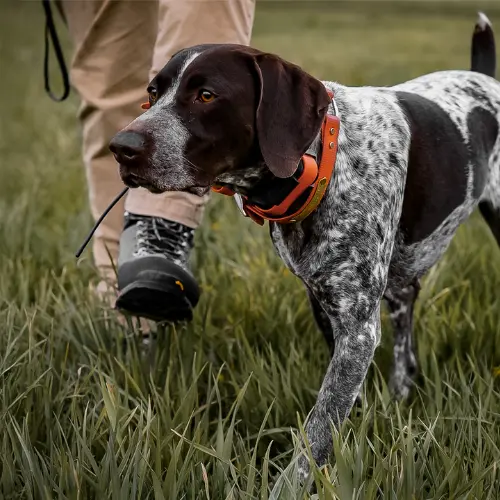

Are E-Collars Safe for Small Dogs?
Dogtra | July 13, 2026
There’s a common misconception that e-collars are only meant for large dogs. In reality, though, small dogs can wear them safely when the collar is designed for their size and used correctly. A proper fit, low stimulation, and humane training are all important, but they do need a lighter touch, so they benefit best from compact receivers, fine stimulation control, and gradual training.
In this article, we’ll separate myths from facts and explain how to introduce an e-collar to a small dog safely.
The Short Answer: E-Collars Can Be Safe for Small Dogs
Yes. An e-collar can be safe for a small dog as long as it’s properly fitted and used correctly. The key is to choose a model designed for small breeds. A lightweight receiver and fine stimulation control let you communicate clearly without overwhelming your dog. Their smaller size and greater sensitivity simply require equipment that’s built for them.
Why Small Dogs Need a Different Approach to E-Collar Training
Small dogs need equipment scaled to their size. A collar designed for a 70-pound retriever isn’t suitable for a 12-pound terrier. Their build calls for gear that matches their needs:
- Smaller necks that require compact receivers
- Lighter body weight
- Greater sensitivity to stimulation
- Lower tolerance for heavy equipment
A small dog training collar provides a lightweight receiver and finer stimulation adjustments, so it’s easier to communicate without overwhelming your dog. Once you understand why small dogs need specialized equipment, the next step is knowing what makes an e-collar safe.
What Makes an E-Collar Safe for a Small Dog?
A safe e-collar comes down to four essentials:
- A lightweight receiver
- Fine stimulation control
- A proper fit
- Humane training practices
When these work together, the collar stays comfortable and delivers consistent communication.
Lightweight Receiver
A lightweight receiver sits comfortably on a small dog’s neck and maintains consistent contact. Heavy receivers can shift, create pressure points, and make communication less reliable.
Fine Stimulation Adjustments
Fine stimulation control lets you adjust the level in small increments until your dog barely notices it. This prevents large jumps between settings and helps you find the lowest effective level.
The 200iQ offers 100 adjustable stimulation levels and fits dogs as small as 10 pounds, allowing most small dogs to train at the lower end of the range.
Proper Collar Fit
A proper fit is snug enough to maintain contact without causing discomfort. As a quick check, you should be able to slide two fingers between the collar strap and your dog’s neck.
A collar that’s too loose can shift during training and create inconsistent contact.
Humane Training Practices
An e-collar should reinforce behaviors your dog already understands, not teach new ones. T each each command first using a leash, rewards, and positive reinforcement. Once your dog understands the command, use the collar at a low level to reinforce it.
Keep training sessions short, consistent, and reward-based to help your dog stay engaged and confident.
Knowing what makes an e-collar safe is the foundation for introducing it to your dog the right way.
How to Introduce an E-Collar to a Small Dog Safely
Introduce the collar gradually so your dog becomes comfortable wearing it before training begins. Once they’re relaxed with the collar, you can begin using low-level stimulation during obedience exercises.
Follow these steps:
- Let your dog wear the collar, turned off, for a few days so it feels normal.
- Teach basic commands first using a leash, praise, and rewards.
- Start at the lowest stimulation level.
- Increase the level only until your dog notices it.
- Pair each cue with praise or a reward.
- Keep training sessions short and positive.
Once your dog understands the basics, you can decide which communication mode works best.
Should You Use Vibration, Tone, or Static Stimulation?
The best mode depends on your dog’s temperament and the situation:
Tone
Tone is an audible cue that helps get your dog’s attention or marks a behavior during training. Many owners pair it with rewards so the sound becomes a familiar signal.
Vibration
Vibration creates a gentle buzz without static stimulation. For many sensitive small dogs, it’s enough to regain attention or reinforce commands.
Static Stimulation
Static stimulation is designed for low-level communication. Start at the lowest setting and use only the minimum level your dog can notice.
Choose the mode that best fits your dog’s sensitivity and your training goals.
Common Mistakes That Can Make an E-Collar Unsafe
Most e-collar problems come from avoidable mistakes rather than the collar itself. Watch out for these common errors:
- Starting at a stimulation level that’s too high
- Choosing a receiver that’s too heavy for your dog
- Fitting the collar too loosely or too tightly
- Leaving the collar on for extended periods
- Using the collar before teaching the command
- Relying on corrections instead of consistent training
Check your dog’s neck regularly for signs of irritation, reposition the receiver during extended wear, and remove the collar after about eight hours to give the skin a break.
Avoiding these mistakes starts with choosing equipment that’s designed for smaller dogs.